 Security
Conference50min
Privacy in Practice with Smart Pseudonymization: Lessons from the Belgian Public Sector
Masks have historically protected identity and privacy. In the digital age, cryptography replaces identifiers with unique codes. The Belgian public sector uses cryptographic pseudonymization to balance privacy and efficiency. Kristof will discuss three practical cryptographic systems he designed for social security and healthcare, already protecting Belgian citizens' data.
talk.summaryAiDisclaimer
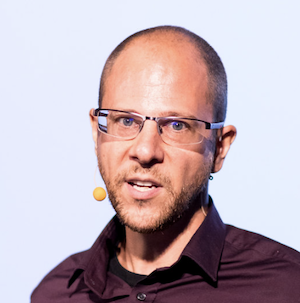
Kristof VerslypeSmals
talkDetail.whenAndWhere
Thursday, October 10, 09:30-10:20
Room 9
Masks are being used for thousands of years, all across the physical world, for reasons such as physical protection, rituals and hiding the identity of the bearer. Physical masks are probably the oldest privacy protection technology.When writing and printing, authors of books and articles used pseudonyms to hide their identity. Voltaire, Lenin and Banksy are well known pseudonyms: modern, written versions of the physical mask. In the digital age we now replace citizens’ identifiers by unique codes – having remarkably powerful and even counter-intuitive properties when based on cryptography.The public sector has two seemingly contradictory tasks: protecting citizens and their privacy, while maximizing value and efficiency for individuals and society. So should we minimize or maximize data?The Belgian public sector increasingly adopts cryptography for pseudonymization – a crucial, and yet sufficiently practical element in realizing the seemingly impossible.In this talk, Kristof introduces three practical cryptographic systems for pseudonymization. He has designed them, based on specific needs within social security and healthcare. If you live in Belgium, your personal data is probably already protected by one of these systems, today. test
Kristof Verslype
Kristof obtained a PhD in Engineering at the Catholic University of Leuven in 2011 (KU Leuven, Belgium), a top-50 ranked university in the world. His research focused on attribute-based credentials and zero-knowledge proofs to improve citizens’ privacy. For his work, he received the 2009 Best Paper award at the International Conference on Security and Cryptography (SECRYPT).
After his PhD, Kristof joined the research team of Smals, a non-profit association which provides ICT services to Belgian public institutions. At Smals Research, he works on several topics such as distributed trust, blockchain, advanced pseudonymization and quantum resistant cryptography.
Kristof’s mission is to be a matchmaker between emerging technologies and academia on the one hand, and the public sector with its specific business needs on the other hand, for anything related to cryptography and privacy technologies.
More info at www.smalsresearch.be and www.cryptanium.eu
After his PhD, Kristof joined the research team of Smals, a non-profit association which provides ICT services to Belgian public institutions. At Smals Research, he works on several topics such as distributed trust, blockchain, advanced pseudonymization and quantum resistant cryptography.
Kristof’s mission is to be a matchmaker between emerging technologies and academia on the one hand, and the public sector with its specific business needs on the other hand, for anything related to cryptography and privacy technologies.
More info at www.smalsresearch.be and www.cryptanium.eu