 Architecture
Conference45min
How we rebuild a legacy monolithic platform at CERN and still sleep at night
This talk details CERN’s journey modernizing a 30-year-old enterprise document management system. It covers modularizing legacy monoliths, implementing API-based integration, adopting semantic versioning, and transitioning to a stateless React frontend—focusing on sustainable architecture choices, trade-offs, and lessons learned rather than just new technologies.
talk.summaryAiDisclaimer
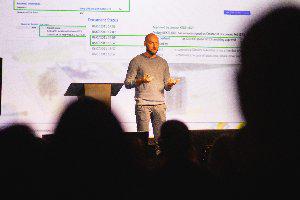
Dmitry KekelidzeCERN
talkDetail.whenAndWhere
Tuesday, February 10, 15:10-15:55
Room C
How do you modernize a critical legacy system inside one of the world’s most complex scientific institutions — while keeping your users, your stakeholders, and your sanity intact?
At CERN, we’ve been rebuilding our enterprise document management platform — a core system serving HR, finance, and operational workflows — from a legacy Java monolith into modular backend services, a React frontend, and an event-driven workflow engine.
But this talk isn’t about chasing shiny tech. It’s about making sustainable architecture choices under constraints: decomposing a nearly 30-year-old legacy platform into modular services aligned with product group boundaries; introducing semantic versioning and release governance for shared components; migrating from direct database dependencies to API-based integration; replacing an embedded workflow engine with a standalone BPMN platform; and re-architecting a stateful UI stack into a stateless React frontend backed by modular APIs.
This isn’t a silver bullet, but it’s a story of trade-offs, lessons learned, and patterns that may help you navigate your own legacy challenges.
At CERN, we’ve been rebuilding our enterprise document management platform — a core system serving HR, finance, and operational workflows — from a legacy Java monolith into modular backend services, a React frontend, and an event-driven workflow engine.
But this talk isn’t about chasing shiny tech. It’s about making sustainable architecture choices under constraints: decomposing a nearly 30-year-old legacy platform into modular services aligned with product group boundaries; introducing semantic versioning and release governance for shared components; migrating from direct database dependencies to API-based integration; replacing an embedded workflow engine with a standalone BPMN platform; and re-architecting a stateful UI stack into a stateless React frontend backed by modular APIs.
This isn’t a silver bullet, but it’s a story of trade-offs, lessons learned, and patterns that may help you navigate your own legacy challenges.
Dmitry Kekelidze
Dmitry Kekelidze is a technology leader and solution architect with over 14 years of experience transforming large-scale enterprise systems.
At CERN—the world’s leading scientific organization—he drives the modernization of mission-critical business platforms in HR, finance, and document management. His work focuses on architecture, agile delivery, and leading hybrid engineering teams through complex modernization and integration projects.
Dmitry is passionate about platform governance, developer productivity, and leveraging AI to enhance software quality. A frequent speaker on orchestration and software architecture, he enjoys sharing insights from building secure, scalable, and future-ready systems.
At CERN—the world’s leading scientific organization—he drives the modernization of mission-critical business platforms in HR, finance, and document management. His work focuses on architecture, agile delivery, and leading hybrid engineering teams through complex modernization and integration projects.
Dmitry is passionate about platform governance, developer productivity, and leveraging AI to enhance software quality. A frequent speaker on orchestration and software architecture, he enjoys sharing insights from building secure, scalable, and future-ready systems.