 Languages
Conference50min
Talking to Machines: The History and Future of Programming Languages
This session reflects on the evolution of programming languages, questioning whether innovation has stalled or merely recycles old ideas. It explores linguistic parallels, the longevity of certain languages, developers’ emotional attachments to tools, and the provocative notion of English becoming the ultimate programming language in the age of AI.
talk.summaryAiDisclaimer
Piotr ŁaskawiecComsenity
talkDetail.whenAndWhere
Friday, June 19, 17:00-17:50
BSD
Since the dawn of computing, we have strived to command machines as efficiently as possible. Over the last century, a myriad of programming languages has emerged, transforming how we converse with silicon. We have tested and implemented new concepts, paradigms, and patterns.
However, it increasingly feels like we are moving in circles, revisiting ideas pioneered in decades past. It is time to pause and reflect on the state of the programmer's primary arsenal.
In this session, we will tackle the hard questions:
However, it increasingly feels like we are moving in circles, revisiting ideas pioneered in decades past. It is time to pause and reflect on the state of the programmer's primary arsenal.
In this session, we will tackle the hard questions:
- Are we stuck in a loop of reinventing the wheel?
- Are there deep analogies between code and natural languages?
- Why do some languages thrive for decades while others end up in the graveyard of history?
- Why do we get so attached to specific tools while despising alternatives?
- Do we prefer writing yet another CRUD in the latest Java, or sending humans to space using "obsolete" tech?
- Will English become the ultimate programming language in the AI era?
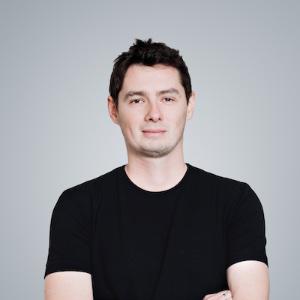
Piotr Łaskawiec
Pragmatic software architect and common sense evangelist. Deeply believes in holistic approach to software development. Occasional speaker and trainer. JVM enthusiast. Mastering the craft since the times of C64. He thrives on helping others to deliver high-quality solutions.