 Future & Robots
Tools-in-Action25min
From Panoramic Vision to Lightweight 3D Worlds for Semantic Visual Tracking in Robotics
This talk presents a practical workflow for aligning real 360° panoramic images with lightweight 3D urban models using semantic segmentation, geometric reasoning, Gaussian Mixture alignment, and visual servoing. It demonstrates how semantic and geometric cues improve robotics perception and offers implementation insights for applied AI and robotics integration.
talk.summaryAiDisclaimer
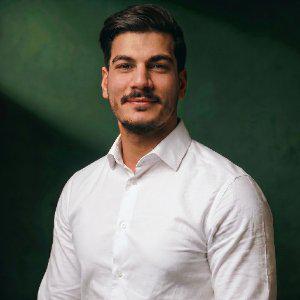
Hussein LoubaniCIAD
talkDetail.whenAndWhere
Thursday, June 18, 16:00-16:25
Amiga OS
Modern AI and robotics systems need practical ways to connect real sensor observations with simplified virtual environments. In this talk, I present a tools-in-action workflow that aligns real 360° panoramic images with lightweight 3D building models using semantic segmentation, geometric reasoning, Gaussian Mixture-based alignment, and visual servoing. Rather than relying on heavy photorealistic digital twins, the pipeline uses semantic structure and panoramic perception to create robust correspondences between real scenes and synthetic urban models. I will show how the different tools fit together, from image understanding and mask extraction to virtual-to-real alignment and tracking, and discuss the main implementation choices, limitations, and lessons learned. The session is aimed at intermediate-level attendees interested in applied AI, robotics perception, computer vision, autonomous systems, and practical research-to-system integration.
key takeaways:
key takeaways:
- How to align real 360° images with lightweight 3D urban models
- How semantic segmentation and geometry can improve robotics perception
- Practical lessons from integrating AI and robotics tools into one pipeline
Hussein Loubani
I am an AI researcher at CIAD Lab, Université de Technologie de Belfort-Montbéliard (UTBM), working at the intersection of Artificial Intelligence, Computer Vision, Robotics, and 3D scene understanding. My research focuses on automating the generation of virtual environments for training and testing autonomous vehicles, and aligning lightweight 3D models from these virtual environments with real-world sensor data for autonomous systems, with applications in visual servoing, 360° perception, semantic segmentation, and 3D building reconstruction.
My work combines panoramic vision, geometric modeling, Gaussian Mixture-based alignment, and semantic scene understanding to improve the interaction between real sensor observations and synthetic urban models. I am particularly interested in building robust pipelines for autonomous driving, robotics, and intelligent spatial perception, where AI can bridge the gap between real and virtual worlds.
Beyond research, I am passionate about science communication and knowledge sharing. I enjoy presenting complex AI and robotics topics in a clear, practical, and engaging way for both technical and non-technical audiences. My speaking interests include AI for robotics, computer vision for autonomous systems, virtual environment generation, 3D reconstruction, visual localization, and the future of intelligent perception systems.
My work combines panoramic vision, geometric modeling, Gaussian Mixture-based alignment, and semantic scene understanding to improve the interaction between real sensor observations and synthetic urban models. I am particularly interested in building robust pipelines for autonomous driving, robotics, and intelligent spatial perception, where AI can bridge the gap between real and virtual worlds.
Beyond research, I am passionate about science communication and knowledge sharing. I enjoy presenting complex AI and robotics topics in a clear, practical, and engaging way for both technical and non-technical audiences. My speaking interests include AI for robotics, computer vision for autonomous systems, virtual environment generation, 3D reconstruction, visual localization, and the future of intelligent perception systems.