 Backend & Integration tech.
Conference50min
Building Quarkus Extensions: A Practical Guide for Java Developers
This session explains how Quarkus extensions enable clean integration of libraries and tools in cloud-native Java applications. It covers when and why to create extensions, their structure, build- and runtime collaboration, and practical development steps, offering guidance, tooling tips, and best practices for building efficient, maintainable Quarkus-native integrations.
talk.summaryAiDisclaimer
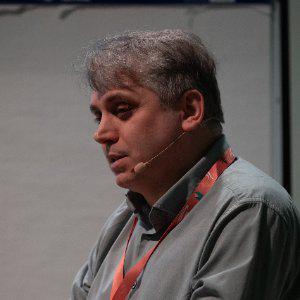
Peter VelychkoFreelance, currently ABN-AMRO
talkDetail.whenAndWhere
Thursday, June 18, 10:15-11:05
Amiga OS
Quarkus is often used as a framework for building fast, cloud-native Java applications, but it also provides a powerful extension model that allows you to integrate libraries, platforms and tools in a clean and idiomatic way. This session explores what are Quarkus extensions, how they work and how Java developers can start building them effectively.
We’ll begin by looking at what problems Quarkus extensions solve and when creating one is the right choice compared to other integration approaches. From there we’ll walk through the structure of an extension project and explain how build-time and runtime components collaborate to deliver Quarkus fast startup and low memory usage.
Using a practical example we’ll demonstrate how to set up an extension, wire in a third-party library, expose configuration and verify behavior with tests. Along the way we’ll cover common pitfalls, helpful tooling and design practices that make extensions easier to maintain and evolve.
By the end of this talk, you’ll have a clear understanding of the Quarkus extension model, the confidence to explore extension development on your own and a solid foundation for turning application-level integrations into reusable, Quarkus-native extensions.
We’ll begin by looking at what problems Quarkus extensions solve and when creating one is the right choice compared to other integration approaches. From there we’ll walk through the structure of an extension project and explain how build-time and runtime components collaborate to deliver Quarkus fast startup and low memory usage.
Using a practical example we’ll demonstrate how to set up an extension, wire in a third-party library, expose configuration and verify behavior with tests. Along the way we’ll cover common pitfalls, helpful tooling and design practices that make extensions easier to maintain and evolve.
By the end of this talk, you’ll have a clear understanding of the Quarkus extension model, the confidence to explore extension development on your own and a solid foundation for turning application-level integrations into reusable, Quarkus-native extensions.
Peter Velychko
I’m a freelance software engineer and consultant with more than 25 years of experience working on backend systems in enterprise environments. My expertise spans Java, Kotlin and software architecture, with a focus on building scalable, maintainable and business-driven solutions. Over my career I helped teams modernize legacy platforms, improve architectural clarity and apply pragmatic engineering practices. I actively work with the modern JVM ecosystem on event-driven systems in production.