 Architecture
Conference50min
Software Architecture: The Bad Parts
This talk exposes how blindly following “good practices” without deep domain understanding leads to brittle, over‑coupled systems. Using a Connected Health liver cancer alerting example, it critiques noun‑driven design, Clean/Hexagonal Architecture, and common pitfalls like context violations and domain leakage, offering insights on aligning architecture with real domain behavior.
talk.summaryAiDisclaimer
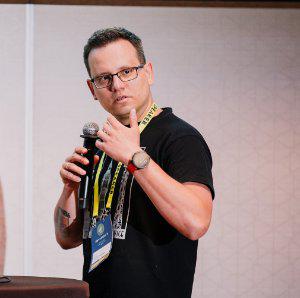
Artur WojnarMasterBorn
talkDetail.whenAndWhere
Wednesday, June 17, 12:25-13:15
Room 2
In this talk, I will demonstrate how so-called good practices, when combined with a shallow understanding of the domain, can create a dangerous illusion of control.
Using a real-world example from the Connected Health domain—specifically liver cancer risk alerting—I will show how a noun-driven design approach leads to excessive coupling and brittle systems.
The talk explores common architectural pitfalls such as context violations, database coupling, domain leakage, and mixing read and write models. I will also challenge a popular industry belief by explaining why Clean / Hexagonal Architecture is not an architecture.
Attendees will leave with a clearer understanding of how design decisions shape system behavior—and how easily “best practices” can fail when the domain is misunderstood.
The talk is based on this article:
👉 https://www.knowhowcode.dev/articles/architecture-the-bad-parts/
I will be presenting using Miro boards and Visual Studio Code.
Tech stack: Node.js / TypeScript / PostgreSQL
Using a real-world example from the Connected Health domain—specifically liver cancer risk alerting—I will show how a noun-driven design approach leads to excessive coupling and brittle systems.
The talk explores common architectural pitfalls such as context violations, database coupling, domain leakage, and mixing read and write models. I will also challenge a popular industry belief by explaining why Clean / Hexagonal Architecture is not an architecture.
Attendees will leave with a clearer understanding of how design decisions shape system behavior—and how easily “best practices” can fail when the domain is misunderstood.
The talk is based on this article:
👉 https://www.knowhowcode.dev/articles/architecture-the-bad-parts/
I will be presenting using Miro boards and Visual Studio Code.
Tech stack: Node.js / TypeScript / PostgreSQL
Artur Wojnar
A software engineer with 15 years of experience, currently working as a hands-on Solutions Architect and consultant, helping development teams deliver better products.
I focus on collaboratively designing solutions with clients — evaluating ideas, assessing risks, and translating them into technical requirements aligned with business goals.
I focus on collaboratively designing solutions with clients — evaluating ideas, assessing risks, and translating them into technical requirements aligned with business goals.