 Development Practices
Conference50min
Thirty years of Java development: keeping it all together
CERN has managed Java-based business applications for nearly three decades, from legacy systems to modern microservices. This talk explores strategies for maintaining consistency and productivity among 80+ developers, including standardized environments, onboarding processes, and using Gradle for build efficiency. It provides insights into sustaining Java systems across generations.
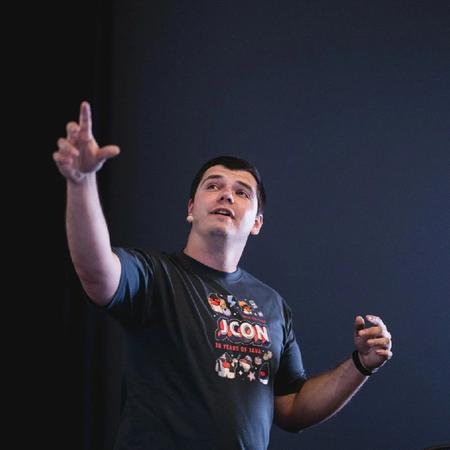
Cristian SchuszterCERN
talkDetail.whenAndWhere
Thursday, November 13, 16:30-17:20
Mimosa 2
At CERN, Java has been at the core of business applications for almost three decades, its first production Java system being released in 1998. The system still lives on to the present day. This long history means dealing with everything from aging monoliths to modern microservices — all coexisting and evolving under one roof. How do we keep it all working, consistent, and productive for 80+ developers across many teams?
This talk analyses the strategies we use to streamline and improve the developer experience: from standardizing development environments with templates and documentation, to making onboarding painless through easy bootstrapping. You'll also hear how we’ve been using Gradle to boost productivity — with centralized build logic, build caching, custom repositories, and internal plugins — all developed to address real-world issues in a codebase that spans generations.
Whether you're maintaining a legacy beast or building something new, this talk offers a behind-the-scenes look at what it takes to keep 30 years of Java running smoothly.
This talk analyses the strategies we use to streamline and improve the developer experience: from standardizing development environments with templates and documentation, to making onboarding painless through easy bootstrapping. You'll also hear how we’ve been using Gradle to boost productivity — with centralized build logic, build caching, custom repositories, and internal plugins — all developed to address real-world issues in a codebase that spans generations.
Whether you're maintaining a legacy beast or building something new, this talk offers a behind-the-scenes look at what it takes to keep 30 years of Java running smoothly.
Cristian Schuszter
Dr. Cristian Schuszter holds a PhD in Systems Engineering with a focus on distributed fault-tolerant software architectures and machine-learning based failure prediction. In his day-to-day, he is somewhere between a Data and Full-stack Software Engineer, with a wide range of tech & job exposure both in academia and industry.
For the past 7 years he's been working with various teams in CERN (the European Organization for Nuclear Research). Currently he's focusing on the architectural directions of the CERN business computing group, with an emphasis on enterprise Java systems and UI.
For the past 7 years he's been working with various teams in CERN (the European Organization for Nuclear Research). Currently he's focusing on the architectural directions of the CERN business computing group, with an emphasis on enterprise Java systems and UI.
comments.speakerNotEnabledComments