 Mind The Geek
University showcase15min
Beyond Classical Computing: Exploring the Hybrid Future and Quantum Potential
The talk argues quantum computers won’t replace classical ones, but accelerate specific tasks in hybrid systems. Using Boolean satisfiability as a concrete example, it explains a published quantum method embedded in a classical pipeline, reports measured results, and emphasizes realistic, targeted quantum advantage.
talk.summaryAiDisclaimer
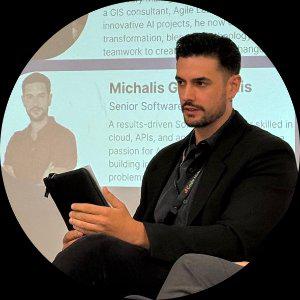
Michail GerogiannisAristotle University of Thessaloniki
talkDetail.whenAndWhere
Friday, November 20, 14:40-14:55
Room 6 - Olympias
Content
Everyone asks when quantum computers will replace our classical ones. It's the wrong question. The real one is where quantum can actually help classical machines, and on which problems. The answer is hybrid computing: the classical computer runs the whole application and hands a quantum processor just the one piece it's uniquely good at.The talk starts with a short, jargon-free explanation of how quantum computers work, then makes everything concrete with one problem: Boolean satisfiability, the hidden engine behind Sudoku, scheduling, chip verification, and more. Using our own published research as the anchor, I show a quantum method running inside a classical pipeline, explain the two core ideas behind it intuitively, and present what we actually measured against classical results.
Key Takeaways
The future isn't classical or quantum. It's a hybrid stack where CPU, GPU, and QPU each do what they do best.Quantum is a targeted accelerator, not a replacement.
Honesty beats hype: the advantage is real but specific.
This is already happening, in industry and in local research labs.
Target Audience
Developers, engineers, and curious attendees. No quantum background needed. Accessible to a general software audience, but with a real research result for anyone who already knows the field.Michail Gerogiannis
Michail Gerogiannis is a software engineer and quantum computing researcher at the Aristotle University of Thessaloniki, where his work focuses on quantum algorithms for optimization. He bridges hands-on software engineering with research, turning complex computational problems into practical, measurable solutions.