 Architecture & Modernization
Quickie15min
The Lazy Engineer's Guide to Scaling
A talk on scaling product delivery across teams through reuse, clean architecture, config-driven design, inner source, automated delivery, and AI with clear rules. It uses everyday analogies and a Claude Code + MCP example to show how big teams stay fast without duplication.
talk.summaryAiDisclaimer
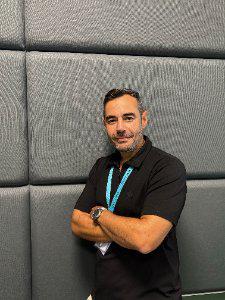
Theodoros AntonopoulosChubb
talkDetail.whenAndWhere
Friday, November 20, 13:15-13:30
Room 3 - Alexandros
Larry Wall said laziness is a programmer's greatest virtue, and he was right. Good laziness doesn't mean skipping tests. It means refusing to build the same thing twice.
This talk shares nine rules for shipping lots of products across many teams on one shared platform. Each rule gets an everyday analogy (Lego bricks, a waiter, a wall socket, a light switch) and a quick look at what it means in code.
We'll cover:
- Building blocks: build once, share everywhere, and keep shared code clean
- Architecture: why screens should never talk straight to the database
- Config over code: new market? New config file, not a new release
- Inner source: borrow it, extend it, give it back
- Delivery: small daily merges, feature flags, and everything as code
- AI: give your AI a rulebook instead of a blank page, with a look at a real Claude Code + MCP harness
Key takeaways
- Scale comes from reuse, not from adding people
- If you're writing if (country == …), it probably belongs in config
- Deploying and releasing should be two separate things
- If you set it up by clicking around, nobody can repeat it
- AI is only as good as the context you give it
Who it's for
Engineers of any level, especially those early in their careers, who want to see how big teams stay fast without stepping on each other. If you know Git and pull requests, you're good to go.
Theodoros Antonopoulos
I'm a Staff AI and Software Engineering Lead at Chubb, where I lead the AI Practice and Software Engineering chapter across EMEA. I define how we build, govern and ship AI applications at enterprise scale, and I architected a multi-region AI development lifecycle that standardizes how teams take AI from idea to production.
I've been building software since 2004. I've designed high-scale, highly secure distributed systems for insurance, banking risk and compliance, including SWIFT payment controls and the trademark and design search engine of the European Union Intellectual Property Office (EUIPO). My toolkit centers on Java, Spring Boot, Kafka, Elasticsearch and Kubernetes, and I've led several modernizations from legacy systems to microservices.
I'm based in Thessaloniki, where I mentor engineers and help teams adopt AI responsibly. I firmly believe the best engineers are lazy in exactly the right places.