 Architecture & Modernization
Quickie15min
From Telemetry to Setpoints: Real-Time Control of Heterogeneous Energy Assets
The talk explains how an Energy Management System turns telemetry and forecasts into optimized schedules and setpoints, then executes them across diverse assets. It also covers practical control-loop challenges such as data validation, delays, missing measurements, communication failures, failed commands, and schedule deviations.
talk.summaryAiDisclaimer
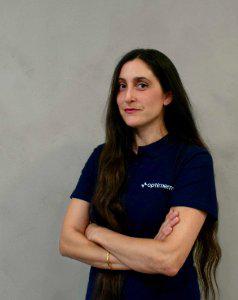
Christina PapaioannouOptimems
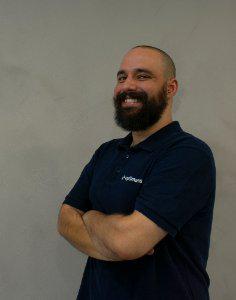
Petros TzallasOptimems
talkDetail.whenAndWhere
Saturday, November 21, 14:20-14:35
Room 3 - Alexandros
An Energy Management System does not stop at producing an optimal decision. To control real-world installations, it must connect heterogeneous energy assets, convert data arriving in different formats into a common representation, and adapt every decision to equipment constraints.
This talk follows the full path from field telemetry and forecasting to optimisation, schedules, and setpoints, showing how decisions move through the system and return as execution feedback. It also examines the practical issues that can affect this control loop: data validation, delays, incomplete measurements, communication failures, unsuccessful commands, and deviations from the planned schedule.
This talk follows the full path from field telemetry and forecasting to optimisation, schedules, and setpoints, showing how decisions move through the system and return as execution feedback. It also examines the practical issues that can affect this control loop: data validation, delays, incomplete measurements, communication failures, unsuccessful commands, and deviations from the planned schedule.
Christina Papaioannou
As a Business Development & Market Strategy Analyst at Optimems, I am driving market expansion for advanced Energy Management Systems (EMS) across Greece and the European Union. I specialize in synthesizing complex energy landscapes—with a focus on the EU and Balkan regions—to identify high-growth business opportunities. By bridging the gap between technical grid compliance and commercial strategy.
My academic foundation includes an M.Sc. in Sustainable Energy Engineering from KTH Royal Institute of Technology. Previous roles at Hoare Lea (UK based) allowed me to develop expertise in techno-economic assessments, renewable system modeling, and utility infrastructure management, reinforcing my ability to address complex energy challenges.
My academic foundation includes an M.Sc. in Sustainable Energy Engineering from KTH Royal Institute of Technology. Previous roles at Hoare Lea (UK based) allowed me to develop expertise in techno-economic assessments, renewable system modeling, and utility infrastructure management, reinforcing my ability to address complex energy challenges.
Petros Tzallas
Petros Tzallas is an Electrical and Computer Engineer with an MSc in Data and Web Science from Aristotle University of Thessaloniki. Since 2020, he has worked as a Research Assistant and Data Scientist at CERTH/ITI, focusing on machine learning, time-series forecasting, energy flexibility and smart energy systems. He has contributed to the EU-funded IANOS and PRECEPT projects and serves as CERTH team coordinator for HARMONISE and REFORMERS. His work also includes technical writing and proposal development for European research and innovation projects. Since July 2026, he has worked as Grants Coordinator at Optimems, supporting funded innovation activities and the development of technical proposals. He has co-authored peer-reviewed research on energy forecasting, demand response, federated learning and residential flexibility.