 Architecture & Modernization
Conference50min
Software Monuments - Architectural Lessons from the Systems That Shaped Computing
The talk explores landmark software systems—Linux, Apollo Guidance Computer, Java, Deep Blue, the World Wide Web, and ELIZA—to reveal enduring architectural principles behind their success and show how these lessons can inspire modern software design.
talk.summaryAiDisclaimer
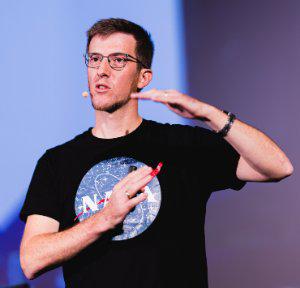
Tobias Vossviadee Consultancy
talkDetail.whenAndWhere
Thursday, October 8, 09:30-10:20
TBA 5
talks.roomOccupancytalks.noOccupancyInfo
Architects in real life study the monuments built by earlier generations like Cologne Cathedral, Big Ben or Eiffel Tower to understand what makes structures endure. What are the monuments of software to inspire us software engineers? And what can we learn from them for our own software architecture projects?
In this talk we explore a curated set of the most influential software monuments that shaped computing and the architectural ideas behind their lasting impact. From Linux, which grew from a student project into the backbone of modern computing, to the Apollo Guidance Computer that guided humans to the Moon. From Java, one of the most influential programming platforms of the last three decades, to Deep Blue, the machine that defeated the human world chess champion and pushed the limits of computational intelligence.
We revisit the birth of the World Wide Web, the software that started the internet revolution and the simple architectural principles that enabled a global platform for applications and information. And we look at ELIZA, the 1960s chatbot that already revealed both the promise and the surprising psychological effects of human–computer interaction.
Through these stories we uncover the architectural principles that made these systems successful. Principles that still shape modern software systems today. The talk connects history with practice, offering concrete insights and inspiration for engineers designing the next generation of software systems.
In this talk we explore a curated set of the most influential software monuments that shaped computing and the architectural ideas behind their lasting impact. From Linux, which grew from a student project into the backbone of modern computing, to the Apollo Guidance Computer that guided humans to the Moon. From Java, one of the most influential programming platforms of the last three decades, to Deep Blue, the machine that defeated the human world chess champion and pushed the limits of computational intelligence.
We revisit the birth of the World Wide Web, the software that started the internet revolution and the simple architectural principles that enabled a global platform for applications and information. And we look at ELIZA, the 1960s chatbot that already revealed both the promise and the surprising psychological effects of human–computer interaction.
Through these stories we uncover the architectural principles that made these systems successful. Principles that still shape modern software systems today. The talk connects history with practice, offering concrete insights and inspiration for engineers designing the next generation of software systems.
Tobias Voss
Tobias works as a modernization architect at viadee consulting. He supports customers in the modernization of their software architecture and the migration of software systems. His focus sector is insurance and banking. He loves to share his knowledge and experience at international conferences on a regularly basis.