 Agentic Engineering & Tooling
Tools-in-Action30min
Tap into the NVIDIA Ecosystem from Java with TornadoVM's Hybrid API
TornadoVM’s Hybrid API lets Java developers combine GPU kernels written in Java with direct access to NVIDIA libraries like CUDA, cuBLAS, and cuFFT—without JNI. The session shows how to build high-performance AI/HPC apps in Java while preserving portability, productivity, and incremental acceleration within the JVM.
talk.summaryAiDisclaimer
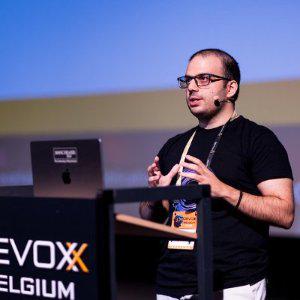
Thanos StratikopoulosBeestream.ai | TornadoVM

Michalis PapadimitriouNeo4j | University of Manchester
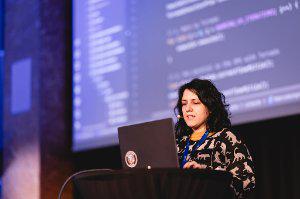
Mary Xekalakibeestream.ai | TornadoVM
talkDetail.whenAndWhere
Tuesday, October 6, 16:50-17:20
Room 4
Java developers have long relied on JNI or manually maintained native bindings to access GPU libraries such as CUDA, cuBLAS, cuFFT, and cuDNN. While these approaches unlock GPU performance, they also introduce complexity, reduce portability, and make Java applications harder to maintain.
This Tools in Action session introduces TornadoVM's new Hybrid API, a new programming model that allows Java developers to seamlessly combine GPU kernels written in Java with direct calls to the NVIDIA software ecosystem. Instead of switching between Java and C++, developers can write high-level Java code while transparently invoking NVIDIA's highly optimized AI and HPC libraries from the same application.
Through live coding demonstrations, attendees will learn how to:
This Tools in Action session introduces TornadoVM's new Hybrid API, a new programming model that allows Java developers to seamlessly combine GPU kernels written in Java with direct calls to the NVIDIA software ecosystem. Instead of switching between Java and C++, developers can write high-level Java code while transparently invoking NVIDIA's highly optimized AI and HPC libraries from the same application.
Through live coding demonstrations, attendees will learn how to:
- Write GPU kernels directly in Java.
- Access CUDA runtime APIs from Java.
- Invoke cuBLAS and cuFFT without writing JNI code.
- Combine custom GPU kernels with vendor-optimized libraries for maximum performance.
- Incrementally accelerate existing Java applications without changing their preferred JDK.
Thanos Stratikopoulos
Dr. Athanasios Stratikopoulos (male) is a Research Fellow at the University of Manchester with specialization on heterogeneous architectures and reconfigurable accelerators. He has authored more than 20 research articles in the field of hardware acceleration, system software and programming languages. Currently his work involves heterogeneous architectures ranging from low-power devices to high-end cloud deployments. He is one of the lead developers of TornadoVM and has been part of the team for the last eight years. In addition to his core contributions to the system's technical development, Dr. Stratikopoulos leads the project's communication and dissemination efforts, helping to articulate its goals and advancements to both academic and industrial audiences through talks, documentation, and outreach activities.
Michalis Papadimitriou
Michalis Papadimitriou is a Senior Software Engineer at Neo4j and a Research Fellow at the University of Manchester. His core expertise includes open-source software development, hardware abstractions for high-level programming languages, compiler optimizations for GPU computing, and enabling large language model (LLM) inference on GPUs for the Java Virtual Machine (JVM).
He is focused on advancing high-performance AI and graph computing systems, with particular interest in GPU acceleration for machine learning workloads on the JVM through the TornadoVM framework, and continues to actively maintain the open-source GPULlama3.java project.
Before joining Neo4j, Michalis was a Research Fellow at the University of Manchester, where he contributed to the TornadoVM project as a Staff Software Engineer. Prior to that, he worked across a range of software stacks at Huawei Technologies and contributed to the open-source machine learning compiler Apache TVM while at OctoAI (formerly OctoML), which was later acquired by NVIDIA.
He is focused on advancing high-performance AI and graph computing systems, with particular interest in GPU acceleration for machine learning workloads on the JVM through the TornadoVM framework, and continues to actively maintain the open-source GPULlama3.java project.
Before joining Neo4j, Michalis was a Research Fellow at the University of Manchester, where he contributed to the TornadoVM project as a Staff Software Engineer. Prior to that, he worked across a range of software stacks at Huawei Technologies and contributed to the open-source machine learning compiler Apache TVM while at OctoAI (formerly OctoML), which was later acquired by NVIDIA.
Mary Xekalaki
I'm a Research Associate at the University of Manchester and lead developer of TornadoVM, an open-source framework that lets Java applications run on GPUs and other accelerators without leaving the JVM. My work sits at the intersection of managed runtimes and compilers - JIT-compiling Java bytecode into GPU code, and bringing modern hardware features like tensor cores, low-precision arithmetic and quantization into reach for Java developers.