 Java Language & Platform
Hands-on Lab120min
From Install to Insight: A Hands-On GPU Lab for Java Developers
Hands-on lab to set up a local GPU-backed LLM in Java using GPULlama3.java, TornadoVM, and DevoxxGenie. Participants install, configure, run, profile, and debug GPU acceleration with TornadoInsight, TornadoPulse, and TornadoViz, gaining a working local inference setup and practical tooling experience.
talk.summaryAiDisclaimer
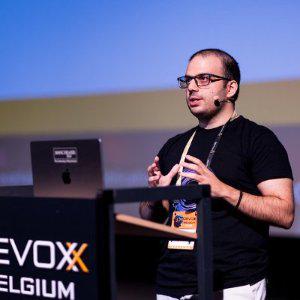
Thanos StratikopoulosTornadoVM

Christos KotselidisUniversity of Manchester
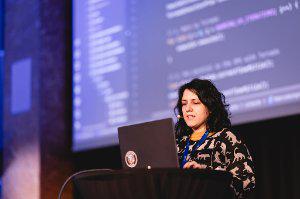
Mary XekalakiUniversity of Manchester
talkDetail.whenAndWhere
Monday, October 5, 16:50-18:50
TBA 8
talks.roomOccupancytalks.noOccupancyInfo
Getting a local LLM running on your GPU from inside Java usually stalls at the installation step — which SDK, which backend, and how do you even tell if the GPU is being used? This hands-on lab removes the guesswork.
Working at your own laptop, you'll install and wire up the GPULlama3.java + TornadoVM stack from scratch: adding TornadoVM via Maven Central, and configuring DevoxxGenie inside IntelliJ IDEA as a local, GPU-backed AI assistant.
Once the stack is running, we'll go hands-on with TornadoVM's tooling ecosystem: the TornadoInsight IDE plugin for real-time compatibility checks and in-IDE task testing, TornadoPulse for reading profiling logs, and TornadoViz for visualizing how your code actually maps onto the GPU. Along the way you'll run and modify small exercises to see JIT-compiled Java execute on your hardware, and — if you're on an NVIDIA GPU — capture a basic profile with Nsight Systems.
We'll close by looking ahead at some early, ongoing exploration into what GPU-accelerated local inference could look like baked directly into an IDE assistant (e.g., DevoxxGenie) - more a glimpse of a direction than a finished feature.
No prior GPU programming or TornadoVM experience required. By the end, you'll have a working local GPU-accelerated LLM setup on your own machine, plus the tools to inspect and debug it - a foundation you can carry straight into your own projects.
Working at your own laptop, you'll install and wire up the GPULlama3.java + TornadoVM stack from scratch: adding TornadoVM via Maven Central, and configuring DevoxxGenie inside IntelliJ IDEA as a local, GPU-backed AI assistant.
Once the stack is running, we'll go hands-on with TornadoVM's tooling ecosystem: the TornadoInsight IDE plugin for real-time compatibility checks and in-IDE task testing, TornadoPulse for reading profiling logs, and TornadoViz for visualizing how your code actually maps onto the GPU. Along the way you'll run and modify small exercises to see JIT-compiled Java execute on your hardware, and — if you're on an NVIDIA GPU — capture a basic profile with Nsight Systems.
We'll close by looking ahead at some early, ongoing exploration into what GPU-accelerated local inference could look like baked directly into an IDE assistant (e.g., DevoxxGenie) - more a glimpse of a direction than a finished feature.
No prior GPU programming or TornadoVM experience required. By the end, you'll have a working local GPU-accelerated LLM setup on your own machine, plus the tools to inspect and debug it - a foundation you can carry straight into your own projects.
Thanos Stratikopoulos
Dr. Athanasios Stratikopoulos (male) is a Research Fellow at the University of Manchester with specialization on heterogeneous architectures and reconfigurable accelerators. He has authored more than 20 research articles in the field of hardware acceleration, system software and programming languages. Currently his work involves heterogeneous architectures ranging from low-power devices to high-end cloud deployments. He is one of the lead developers of TornadoVM and has been part of the team for the last eight years. In addition to his core contributions to the system's technical development, Dr. Stratikopoulos leads the project's communication and dissemination efforts, helping to articulate its goals and advancements to both academic and industrial audiences through talks, documentation, and outreach activities.
Christos Kotselidis
I am an Associate Professor (Reader) at The University of Manchester and a Chief Engineer at Pierer Innovation.I currently lead the TornadoVM and MaxineVM projects and I am the technical coordinator of the Horizon Europe/UKRI AERO project. In addition I am the PI of the EU Horizon Europe/UKRI P2CODE, TANGO, and ENCRYPT projects.My work focuses on both hardware and software. In particular, I am interested in embedded systems, micro-architecture, hw/sw co-designed CPUs and VMs, Heterogeneous Acceleration, Compilers, Virtual Machines and Garbage Collection.
Mary Xekalaki
I'm a Research Associate at the University of Manchester and lead developer of TornadoVM, an open-source framework that lets Java applications run on GPUs and other accelerators without leaving the JVM. My work sits at the intersection of managed runtimes and compilers - JIT-compiling Java bytecode into GPU code, and bringing modern hardware features like tensor cores, low-precision arithmetic and quantization into reach for Java developers.