 Agentic Engineering & Tooling
Conference50min
Introducing Agent Control Theory: The System Runs the Model
The talk presents “Agent Control Theory” for enterprise coding agents: treat agents as measurable systems, log every run, judge against specs, and use evidence to optimize prompts, tools, workflows, or models. It aims to reduce cost, improve quality, and enable vendor portability through controlled experimentation.
talk.summaryAiDisclaimer
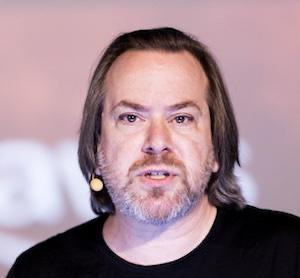
Mark PollackTuvium
talkDetail.whenAndWhere
Thursday, October 8, 17:40-18:30
TBA 2
talks.roomOccupancytalks.noOccupancyInfo
Hand two teams the same model and you get wildly different agents. That gap, the system around the model, is where the enterprise questions live: Is it working? How would I know? Can I make it cheaper? Am I locked into one vendor? None is settled by a better model.
This talk introduces Agent Control Theory: treating a coding agent the way engineers treat a drone or autonomous car, an uncertain system you instrument, measure, and steer. Record every run as an immutable journal, judge it against a spec, model the trajectory as a Markov chain, and let the evidence pick the next lever: prompt, skills, workflow, tools, or model, cheapest first.
This is classical control theory, and the math earns its keep: the Markov model yields expected work remaining, and your chosen cost (tokens spent, quality verified) is the performance index the loop steers by. The key is the controller, turning verdict and diagnosis into the next move: human today, AI as the evidence matures.
The agent is not one giant prompt but a workflow of deterministic steps and AI steps, with agentic CLIs (Claude Code, Gemini CLI, Codex) doing the judgment work and Agent Client the portable API to programmatically control them. Once the judges become a benchmark, the agent is a swappable engine: same task, same judges, same evidence. The vendor swap becomes an experiment, not a leap of faith. Source available Java, the AgentWorks stack: agent-workflow, agent-client, agent-journal, agent-judge, agent-experiment.
This talk introduces Agent Control Theory: treating a coding agent the way engineers treat a drone or autonomous car, an uncertain system you instrument, measure, and steer. Record every run as an immutable journal, judge it against a spec, model the trajectory as a Markov chain, and let the evidence pick the next lever: prompt, skills, workflow, tools, or model, cheapest first.
This is classical control theory, and the math earns its keep: the Markov model yields expected work remaining, and your chosen cost (tokens spent, quality verified) is the performance index the loop steers by. The key is the controller, turning verdict and diagnosis into the next move: human today, AI as the evidence matures.
The agent is not one giant prompt but a workflow of deterministic steps and AI steps, with agentic CLIs (Claude Code, Gemini CLI, Codex) doing the judgment work and Agent Client the portable API to programmatically control them. Once the judges become a benchmark, the agent is a swappable engine: same task, same judges, same evidence. The vendor swap becomes an experiment, not a leap of faith. Source available Java, the AgentWorks stack: agent-workflow, agent-client, agent-journal, agent-judge, agent-experiment.
Mark Pollack
Dr. Mark Pollack is the creator of AgentWorks, an open-source agent engineering stack for the JVM, and the founder of Spring AI. After more than twenty years building the Spring ecosystem's data and integration projects, he now works independently on the infrastructure that makes AI agents dependable: durable workflow orchestration, execution tracing and cost metering, evaluation and judging, sandboxed execution, and a multi-provider client that drives agentic CLIs — Claude Code, Gemini, Qwen, Amazon Q — behind a single API. The stack spans agent-workflow, agent-journal, agent-judge, agent-bench, agent-sandbox, agent-hooks, and agent-client, alongside the Agent Client Protocol (ACP) Java SDK and claude-agent-sdk-java, the Java SDK mirroring Anthropic's official SDKs.
His current research, Agent Control Theory, treats coding agents as systems to be measured and steered rather than prompted and hoped for: capture the full execution trajectory, judge the outcome, and use the data to characterize and then improve agent behavior. The approach draws on his pre-Spring career in experimental physics, where he built offline computing systems for high-energy nuclear physics at Brookhaven National Laboratory before moving to front-office trading systems in finance.
Mark has been part of Spring since 2003, when he contributed its JMS support. As founder and lead of Spring AI he brought LLM integration, RAG, vector stores, and tool calling to Java and Spring developers. He previously founded and led Spring Data, Spring Cloud Data Flow, Spring XD, Spring AMQP, Spring Shell, and Spring.NET.
He is a returning speaker at Devoxx Belgium, SpringOne, Spring I/O, and DevNexus, and has appeared on Software Engineering Daily. He builds in the open at lab.pollack.ai and writes at pollack.ai.
His current research, Agent Control Theory, treats coding agents as systems to be measured and steered rather than prompted and hoped for: capture the full execution trajectory, judge the outcome, and use the data to characterize and then improve agent behavior. The approach draws on his pre-Spring career in experimental physics, where he built offline computing systems for high-energy nuclear physics at Brookhaven National Laboratory before moving to front-office trading systems in finance.
Mark has been part of Spring since 2003, when he contributed its JMS support. As founder and lead of Spring AI he brought LLM integration, RAG, vector stores, and tool calling to Java and Spring developers. He previously founded and led Spring Data, Spring Cloud Data Flow, Spring XD, Spring AMQP, Spring Shell, and Spring.NET.
He is a returning speaker at Devoxx Belgium, SpringOne, Spring I/O, and DevNexus, and has appeared on Software Engineering Daily. He builds in the open at lab.pollack.ai and writes at pollack.ai.