 Agentic Engineering & Tooling
Conference50min
Modernizing legacy code with AI: hands-on examples & lessons learned
Smals Research shares practical lessons from using AI to modernize legacy software, including Java EE to Jakarta EE migrations and COBOL environments. The session shows where AI speeds up migration, where it fails, and how teams can keep modernization reliable, documented, and verifiable.
talk.summaryAiDisclaimer
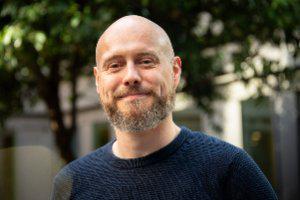
Koen VanderkimpenSmals
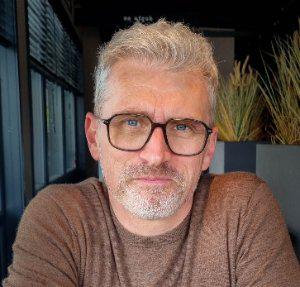
Wim LambrechtSmals
talkDetail.whenAndWhere
Thursday, October 8, 15:00-15:50
TBA 2
talks.roomOccupancytalks.noOccupancyInfo
AI helps developers write new software faster. But can it also help modernize legacy applications?
In this session, Smals Research shares practical experience from real e-government projects. Through the migration of ageing Java applications from Java EE to Jakarta EE, the speakers explore how AI supports software modernization. Topics include namespace changes, deprecated APIs, outdated dependencies and complex build configurations.
The session highlights where AI genuinely accelerates migration work, where it falls short, and how teams can keep modernization efforts reliable and verifiable. Drawing on additional experience with other legacy environments, including COBOL, the speakers also share practical approaches for documenting, rewriting and maintaining legacy code with AI assistance.
Whether you're modernizing an existing application or exploring AI-assisted development, this session offers a realistic view of what AI can and cannot do today.
In this session, Smals Research shares practical experience from real e-government projects. Through the migration of ageing Java applications from Java EE to Jakarta EE, the speakers explore how AI supports software modernization. Topics include namespace changes, deprecated APIs, outdated dependencies and complex build configurations.
The session highlights where AI genuinely accelerates migration work, where it falls short, and how teams can keep modernization efforts reliable and verifiable. Drawing on additional experience with other legacy environments, including COBOL, the speakers also share practical approaches for documenting, rewriting and maintaining legacy code with AI assistance.
Whether you're modernizing an existing application or exploring AI-assisted development, this session offers a realistic view of what AI can and cannot do today.
Koen Vanderkimpen
Koen Vanderkimpen is a Computer Science Engineer and Research Consultant at Smals who bridges the gap between practical software application and AI research. He evaluates innovative cloud technologies and architectural patterns—such as Event-Driven Architecture—that help the organization build robust, scalable systems.
Recently, his focus has shifted to the intersection of agentic AI and legacy code, using LLM’s to "time travel in the terminal" and modernize outdated, critical systems. A strong believer in applied research, Koen continuously evaluates new tools and best practices, bringing a grounded approach to AI-assisted coding and architectural refactoring.
Koen works at Smals, an association of over 300 public institutions in Belgium, delivering shared IT services and acting as their joint in-house ICT organization, offering skills, best practices, economies of scale, and software re-use. For over 85 years, Smals has supported social security and healthcare institutions with innovative IT and infrastructure services.
Recently, his focus has shifted to the intersection of agentic AI and legacy code, using LLM’s to "time travel in the terminal" and modernize outdated, critical systems. A strong believer in applied research, Koen continuously evaluates new tools and best practices, bringing a grounded approach to AI-assisted coding and architectural refactoring.
Koen works at Smals, an association of over 300 public institutions in Belgium, delivering shared IT services and acting as their joint in-house ICT organization, offering skills, best practices, economies of scale, and software re-use. For over 85 years, Smals has supported social security and healthcare institutions with innovative IT and infrastructure services.
Wim Lambrecht
Wim Lambrecht is a developer, architect, builder, and lifelong learner who enjoys turning emerging technologies into practical solutions. He designs, co-creates, and develops platforms, frameworks, and modernization approaches that help organizations deliver software more effectively.
His current focus is on applying AI to real-world engineering challenges, including code migration, platform engineering, and software modernization. A strong believer in knowledge sharing, Wim continuously explores new tools, techniques, and ways of working, adapting to the rapidly evolving AI landscape while maintaining a pragmatic focus on delivering value.
Wim works at Smals, an association of over 300 public institutions in Belgium, delivering shared IT services and acting as their joint in-house ICT organization, offering skills, best practices, economies of scale, and software re-use. For over 85 years, Smals has supported social security and healthcare institutions with innovative IT and infrastructure services.
His current focus is on applying AI to real-world engineering challenges, including code migration, platform engineering, and software modernization. A strong believer in knowledge sharing, Wim continuously explores new tools, techniques, and ways of working, adapting to the rapidly evolving AI landscape while maintaining a pragmatic focus on delivering value.
Wim works at Smals, an association of over 300 public institutions in Belgium, delivering shared IT services and acting as their joint in-house ICT organization, offering skills, best practices, economies of scale, and software re-use. For over 85 years, Smals has supported social security and healthcare institutions with innovative IT and infrastructure services.