 Java Language & Platform
Conference50min
Quarkus Meets Leyden at the JVM Performance Edge
This talk shares hands-on Quarkus experiments with Project Leyden, exploring how Leyden’s JVM startup and warm-up improvements interact with Quarkus’ build-time optimizations. It highlights what works, current limitations, performance findings, broken assumptions, and design changes needed to combine both approaches effectively.
talk.summaryAiDisclaimer
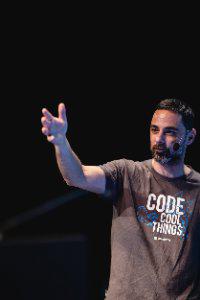
Georgios AndrianakisIBM

Ana-Maria MihalceanuOracle
talkDetail.whenAndWhere
Wednesday, October 7, 17:50-18:40
Room 10
Project Leyden raises a hard question for Quarkus: can we benefit from faster JVM startup and warm-up without undoing the assumptions that make Quarkus fast today? After years of optimizations to reduce startup costs, profiling JVM Quarkus applications still points to familiar hotspots: class loading and reading from JAR files.
Quarkus has already pushed hard in these areas through build-time processing, custom packaging, and class loading strategies. Leyden promises a major shift for JVM applications, but combining it with Quarkus is not just about enabling a new feature. Some of Leyden’s current constraints interact directly with optimizations Quarkus relies on, forcing us to question where responsibilities should sit between the framework, the JVM, and the application packaging model.
This talk shares findings from experimenting with Project Leyden inside Quarkus, and you will learn what to watch for when fine-tuning startup and warm-up behavior, and how to reason about the trade-offs between Quarkus’ existing optimizations and Leyden’s emerging JVM-level capabilities. Expect concrete findings, performance observations, current limitations, experimental prototypes, and practical lessons for developers who want to prepare their Quarkus applications for the next generation of JVM startup optimization.
Quarkus has already pushed hard in these areas through build-time processing, custom packaging, and class loading strategies. Leyden promises a major shift for JVM applications, but combining it with Quarkus is not just about enabling a new feature. Some of Leyden’s current constraints interact directly with optimizations Quarkus relies on, forcing us to question where responsibilities should sit between the framework, the JVM, and the application packaging model.
This talk shares findings from experimenting with Project Leyden inside Quarkus, and you will learn what to watch for when fine-tuning startup and warm-up behavior, and how to reason about the trade-offs between Quarkus’ existing optimizations and Leyden’s emerging JVM-level capabilities. Expect concrete findings, performance observations, current limitations, experimental prototypes, and practical lessons for developers who want to prepare their Quarkus applications for the next generation of JVM startup optimization.
Georgios Andrianakis
Georgios works for IBM as a Senior Principal Software Engineer and is currently one of the most active contributors to Quarkus, where he works in all sorts of areas, including but not limited to LangChain4j, RESTEasy Reactive, Spring compatibility, Kubernetes support, testing, Kotlin, and more.
He is also an enthusiastic promoter of Quarkus who never misses a chance to spread the Quarkus love!
He is also an enthusiastic promoter of Quarkus who never misses a chance to spread the Quarkus love!
Ana-Maria Mihalceanu
Ana is a Java Champion Alumni and Senior Developer Advocate for the Java Platform Group at Oracle, with an extensive background in Java and cloud development. More recently, her work has expanded to explore how machine learning and AI can be applied within the Java ecosystem, helping Java developers adopt emerging capabilities while continuing to benefit from the stability, tooling, and performance of the Java Platform. She actively supports the growth of technical communities through knowledge sharing and enjoys curating content for conferences as a program committee member.