 People, Practices & Career
Conference50min
The pizza party of the future 🍕 software teams and product value in the age of coding agents
AI is reshaping software teams, creating new bottlenecks around value and trust. The talk explores how developer roles, team structures, and responsibilities may evolve—from cross-functional teams to AI-assisted models—drawing on past agile critiques to imagine a more value-driven future of human-agent collaboration.
talk.summaryAiDisclaimer
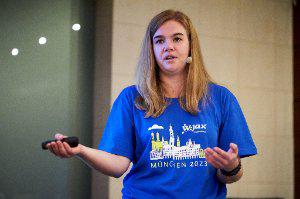
Katie ClarkComsysto Reply
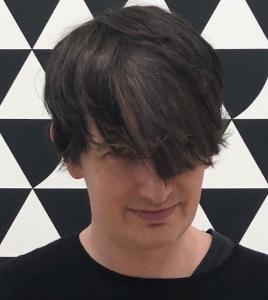
Simon RohrerSaxo Bank
talkDetail.whenAndWhere
Wednesday, October 7, 14:00-14:50
TBA 5
talks.roomOccupancytalks.noOccupancyInfo
AI is having a huge impact on our software development teams - nobody is sure how the role of a developer will evolve, and Simon and Katie don’t have the perfect prediction either!
Now that our teams have ever more capable coding assistants working around the clock, we are seeing “new” bottlenecks appear around value and trust questions. In response to this, we’re seeing organizations create new flavors of engineering roles, move down to one-pizza-teams, move to product owners and their AI wrangler (a one-pizza-slice team?), or even build factory lines.
This is not the first time the way we approach software teams has changed: we’ve gone from silos and super specialization to cross-functional Scrum teams and 2-pizza teams; from T-shaped and M-shaped professionals to full-stack, full-lifecycle, DevSecFin…Ops, value streams, Team Topologies, and more. We’ve added all kinds of coaches and then removed them again.
So who is invited to the pizza party of the future? Who makes decisions, who takes responsibility, what new and old roles and skills will be needed? And who is no longer welcome? We’ll take a look at what some of the friendlier agile critics from the past can warn us about. We will see how their takes can help us move to a more value-oriented future with agents and humans collaborating on user needs.
Now that our teams have ever more capable coding assistants working around the clock, we are seeing “new” bottlenecks appear around value and trust questions. In response to this, we’re seeing organizations create new flavors of engineering roles, move down to one-pizza-teams, move to product owners and their AI wrangler (a one-pizza-slice team?), or even build factory lines.
This is not the first time the way we approach software teams has changed: we’ve gone from silos and super specialization to cross-functional Scrum teams and 2-pizza teams; from T-shaped and M-shaped professionals to full-stack, full-lifecycle, DevSecFin…Ops, value streams, Team Topologies, and more. We’ve added all kinds of coaches and then removed them again.
So who is invited to the pizza party of the future? Who makes decisions, who takes responsibility, what new and old roles and skills will be needed? And who is no longer welcome? We’ll take a look at what some of the friendlier agile critics from the past can warn us about. We will see how their takes can help us move to a more value-oriented future with agents and humans collaborating on user needs.
Katie Clark
Katie is a delivery lead, manager, (ex) software developer, and trainer at Reply Comsysto. Over the past 8 years, she has been involved in complex software projects spanning various domains, from semiconductor manufacturing to food supply chains.
Developing quality software products requires a team effort. Therefore, her focus is on fostering a collaborative team culture, promoting an agile mindset, and continuously evolving suitable processes within the organization.
Developing quality software products requires a team effort. Therefore, her focus is on fostering a collaborative team culture, promoting an agile mindset, and continuously evolving suitable processes within the organization.
Simon Rohrer
Simon Rohrer, Head of Enterprise Architecture and Ways of Working at Saxo Bank has spent his career advocating for modern ways of working, with roles in hands on software engineering, agile coaching with a focus on technical excellence, and senior roles in enterprise architecture and strategy.
He's a co-author of Jonathan Smart's IT Revolution Press book Sooner Safer Happier, and working on a chapter on organising for outcomes for the forthcoming follow-up book.
He's a co-author of Jonathan Smart's IT Revolution Press book Sooner Safer Happier, and working on a chapter on organising for outcomes for the forthcoming follow-up book.