 People, Practices & Career
Conference50min
The Quantum Tech Lead: Hands-On and Abstract at the Same Time
This talk explores the transition from individual contributor to technical leader, showing how leadership can amplify impact rather than reduce it. Drawing on experience at CERN, it shares practical techniques for adapting, staying relevant, and maintaining technical influence while leading teams.
talk.summaryAiDisclaimer
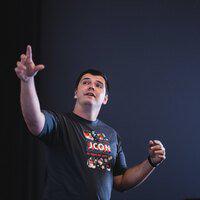
Cristian SchuszterCERN
talkDetail.whenAndWhere
Friday, October 9, 09:30-10:20
TBA 6
talks.roomOccupancytalks.noOccupancyInfo
So you got "promoted" to lead a team / project / whatever. What now? Do you have what it takes? It certainly seems that your hierarchy thinks so. But oftentimes things are not so black and white. Being a great plumber doesn't automatically make you a great leader of plumbers, so you need to adapt and adjust your ways of working by dropping old habits and picking up new ones. Then you start getting worried by the fact that you won't be able to have as much impact as before, since you're not coding as much as you used to in the past (and that's what you're good at, right?).
What if leadership can amplify your technical impact instead? In this talk, I’ll share how I evolved from individual contributor to a mix of Solution Architect, Tech Lead and classical Engineering Manager at CERN - keeping my hands in the code while scaling my influence through the team that I work with. I'll be sharing best practices and adjustment techniques for you to use when faced with the difficult transition process into technical leadership. And lastly, we'll be talking about how to stay relevant even if you're not spending countless hours honing your coding skills anymore.
What if leadership can amplify your technical impact instead? In this talk, I’ll share how I evolved from individual contributor to a mix of Solution Architect, Tech Lead and classical Engineering Manager at CERN - keeping my hands in the code while scaling my influence through the team that I work with. I'll be sharing best practices and adjustment techniques for you to use when faced with the difficult transition process into technical leadership. And lastly, we'll be talking about how to stay relevant even if you're not spending countless hours honing your coding skills anymore.
Cristian Schuszter
Dr. Cristian Schuszter holds a PhD in Systems Engineering with a focus on distributed fault-tolerant software architectures and machine-learning based failure prediction. In his day-to-day, he is somewhere between a Data and Full-stack Software Engineer, with a wide range of tech & job exposure both in academia and industry.
For the past 8 years he's been working with various teams in CERN (the European Organization for Nuclear Research). Currently he's focusing on the architectural directions of the CERN business computing group, with an emphasis on enterprise Java systems and UI.
For the past 8 years he's been working with various teams in CERN (the European Organization for Nuclear Research). Currently he's focusing on the architectural directions of the CERN business computing group, with an emphasis on enterprise Java systems and UI.